A wallet can be compromised without its password ever being stolen. That sounds counterintuitive, but it is one of the most important facts in DeFi security: many losses happen when a user willingly approves a transaction whose consequences were misunderstood. The browser extension is therefore more than a place to click “confirm.” It is an interpretation layer between a decentralized application and a human decision. For a US-based DeFi user considering a Rabby wallet extension, the central question is not simply whether the software installs successfully. It is whether the installation and signing process helps reveal what a transaction will actually do.
Consider a familiar scenario. A user visits a legitimate-looking decentralized exchange, connects a wallet, and sees a prompt to approve a token. The amount appears routine. Yet the approval may grant a contract permission to spend far more than the user intended, or an unfamiliar contract may request an action that is difficult to interpret from a raw hexadecimal message. The user is not necessarily careless. The interface has compressed a complex state change into a small confirmation window. This is where wallet design, user attention, and smart-contract risk meet.
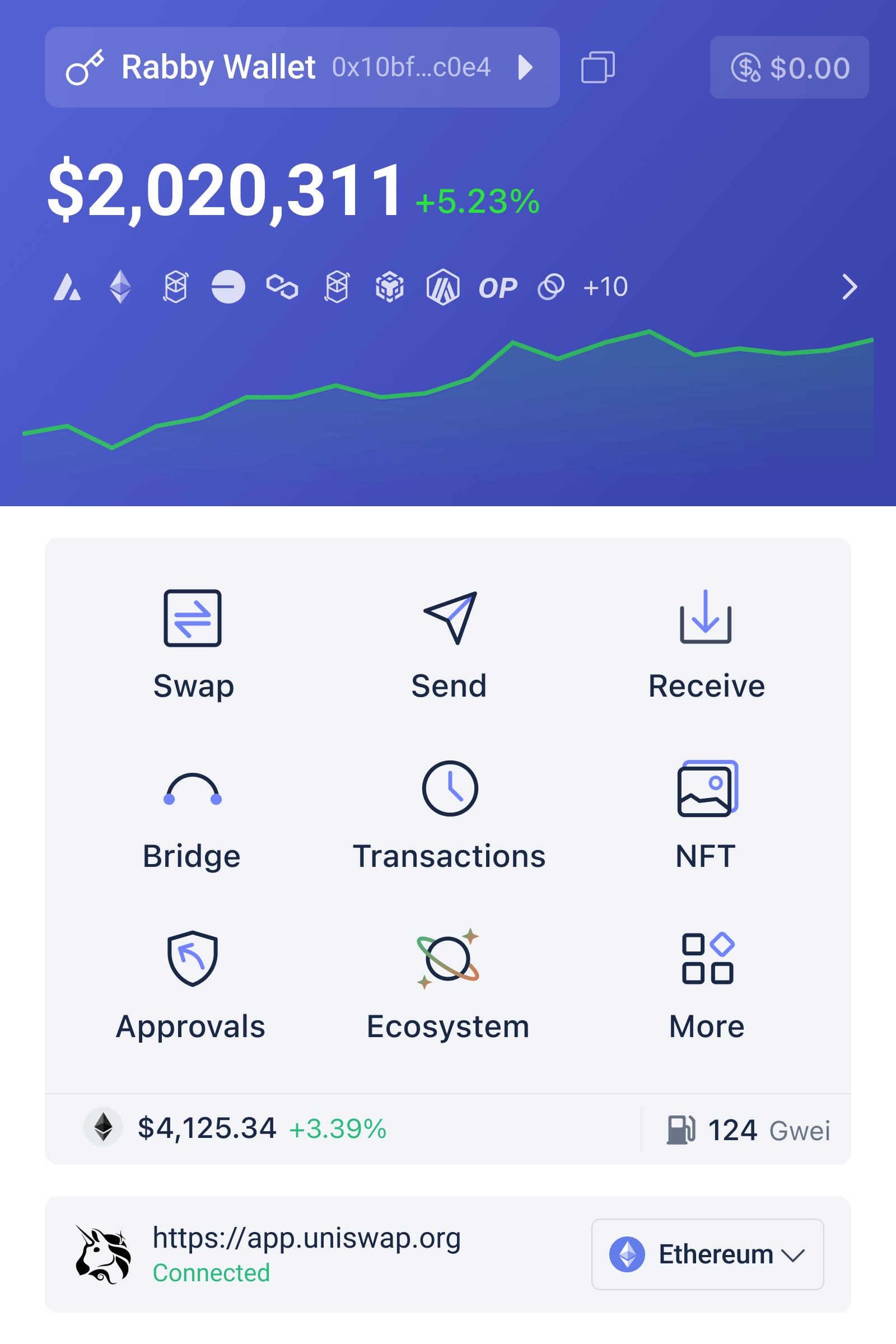
From address storage to transaction interpretation
Early cryptocurrency wallets were often understood as digital key containers. That description remains technically useful: control of a private key or signing authority determines who can authorize transactions. But it is incomplete for modern DeFi. A wallet now sits inside a chain of decisions involving token approvals, contract calls, bridges, liquidity pools, network fees, and sometimes several actions bundled together. The security problem has shifted from protecting a secret alone to understanding what that secret is being asked to authorize.
This historical change explains why browser extensions matter. A decentralized application can present a polished front end while the underlying transaction remains complicated. A wallet that displays only a destination address and a gas estimate leaves the user to infer the economic effect. A more context-aware wallet can attempt to identify the contract, show the assets involved, flag potentially risky permissions, and simulate or summarize the expected outcome where that information is available. These features do not make a transaction safe by definition, but they can reduce the gap between machine-readable instructions and human understanding.
That distinction is worth keeping clear: security warnings are decision support, not proof of safety. Simulation depends on the state of the blockchain and on what the wallet can successfully analyze. A contract may behave differently when conditions change, when a transaction is sent by another address, or when an external protocol is manipulated. A warning can also be missed, misunderstood, or dismissed under time pressure. In other words, a wallet can improve the quality of a decision without taking responsibility for the decision away from the user.
For someone preparing a Rabby extension download, the first security boundary is the source itself. Search results, sponsored placements, social posts, and direct messages can all lead to imitations. A prudent installation process begins by navigating through a trusted project route or verified browser-extension listing, checking the publisher information, and reviewing the permissions requested by the browser. The exact availability and interface can vary by browser and region, so users should treat the official distribution path as part of the security model rather than as a minor convenience.
The installation decision is part of the threat model
Many users think of wallet security as beginning after installation, when a seed phrase is created. In practice, it begins earlier. A fake extension can capture a recovery phrase, redirect transactions, or imitate familiar screens. Even a genuine extension can be undermined if the user stores the recovery phrase in cloud notes, sends it through messaging apps, or photographs it for convenience. The recovery phrase is not a password reset mechanism. Anyone who obtains it may be able to recreate the wallet elsewhere.
A safer setup separates roles. A browser wallet can be useful for everyday interactions with decentralized applications, while larger holdings may be kept behind a hardware wallet or another signing arrangement. This is not because browser extensions are inherently unusable; it is because hot wallets are exposed to a broader operating environment. Browser sessions, malicious websites, compromised computers, and deceptive signing requests all create opportunities for error or attack. Limiting the balance available to routine experimentation reduces the potential impact of one mistake.
Network selection deserves similar attention. Ethereum and other compatible networks can look alike from a user-interface perspective, but assets and contracts belong to particular environments. A token with the same ticker may exist on multiple chains and may not have the same value, liquidity, or legitimacy on each one. Before approving a transaction, a user should check the selected network, the application domain, the token contract where relevant, and the destination. A wallet may display useful labels, but labels are aids to verification, not substitutes for it.
The most practical mental model is to treat every signing prompt as a small contract review. Ask four questions: What asset or permission is leaving my control? Which contract is receiving authority? Is this action reversible? What is the maximum plausible loss if the application, approval, or assumption is wrong? This method is more durable than memorizing a list of warning colors because it works across swaps, lending markets, NFT platforms, bridges, and airdrop claims.
Token approvals illustrate why this framework matters. A transaction that moves no tokens immediately may still create future spending authority. If that authority is broad, a compromised or malicious contract could later attempt to use it. Some applications request limited allowances; others may request a larger or effectively unlimited amount to avoid repeated approvals. The convenience is real, but so is the exposure. Revoking old approvals can reduce residual risk, although revocation itself is an on-chain transaction with fees and does not undo actions already taken.
What a wallet can improve—and where it cannot
Transaction simulation and risk detection are valuable because they target a common failure mode: the user sees the requested action but not its likely consequence. A useful explanation might reveal that a supposed claim transfers an existing asset, that a swap produces an unexpected token, or that a contract interaction affects a particular permission. This is a meaningful advance over blind signing. It supports what security researchers often describe as usable security: protections must fit the way people actually make decisions, not merely exist in the technical architecture.
Yet interpretation has boundaries. Smart contracts can depend on rapidly changing market prices, oracle data, block ordering, permissions held by other contracts, or conditions that are hard to model. A simulation is a forecast of execution under particular assumptions, not an insurance policy. Risk databases may also lag behind newly deployed contracts. Conversely, an unfamiliar contract is not automatically fraudulent; new protocols can be legitimate, while established interfaces can still be compromised. The appropriate response to an alert is investigation, not automatic panic or automatic dismissal.
There is also a behavioral trade-off. More warnings can increase awareness, but too many warnings can produce alert fatigue. If users learn that most prompts are harmless, they may approve a genuinely dangerous request without reading it. Good wallet design must therefore balance completeness with prioritization. The user’s own habits remain consequential: slowing down for unusual actions, refusing unsolicited claims, separating test funds from savings, and avoiding signatures that cannot be explained in plain language.
For a US audience, this is especially relevant because DeFi activity often crosses platforms, networks, and legal categories without a single institution providing a universal safety net. Consumer protections, tax treatment, and platform responsibilities may differ depending on the asset and service involved. Technical self-custody does not eliminate financial risk, counterparty risk, market volatility, or regulatory uncertainty. A secure signing process can help ensure that a user authorizes the transaction they intended; it cannot guarantee that the protocol will remain solvent or that the asset will retain value.
A practical workflow for downloading and using the extension
Start with provenance. Use the rabby extension download information as a starting point for locating the intended installation route, then confirm that the final browser listing and publisher details match the project’s official presence. Do not install an extension sent through a private message merely because its logo and wording look familiar. After installation, create or import a wallet only in a context you control, and never enter a recovery phrase into a website, support form, or pop-up that asks for it.
Next, establish a low-value test routine. Connect to a known application, verify the network, inspect the transaction summary, and send only an amount whose loss would be tolerable. Watch whether the wallet’s interpretation matches the application’s stated purpose. If the request is for an approval, identify the token and allowance. If it is a signature rather than a transaction, ask why the signature is needed and whether its meaning is legible. “No gas fee” does not mean “no risk”; off-chain signatures can still authorize later actions in some systems.
Finally, build an account architecture rather than relying on one wallet for everything. A daily-use address can interact with experimental applications. A separate address can hold longer-term assets. A hardware wallet can add a distinct confirmation boundary for higher-value funds, although it does not protect users who approve a malicious transaction on the device. Periodically review allowances and connected applications, update the browser and extension through trusted channels, and keep recovery materials offline. These measures are less glamorous than a new feature, but they address the pathways through which losses actually occur.
What to watch as wallet security evolves
The next phase of wallet security is likely to be less about displaying more technical data and more about improving the quality of interpretation. Conditional scenarios are useful here. If simulation becomes more reliable across complex protocols, users may gain earlier visibility into hidden asset movements and permission changes. If attackers adapt by using contracts that evade analysis or exploit timing and cross-chain dependencies, wallets will need better uncertainty labels rather than stronger-sounding assurances. The important signal is not whether a wallet claims to eliminate risk, but whether it explains what it knows, what it inferred, and what it could not verify.
That standard also gives users a way to compare wallet tools without treating any brand as a guarantee. Ask whether the product helps answer the economic question behind a signature, whether warnings are specific enough to act on, whether limitations are disclosed, and whether the workflow encourages safer separation of funds. A wallet is strongest when it makes careful behavior easier. It is weakest when attractive summaries create the illusion that due diligence has been automated.
FAQ: Rabby wallet extension and DeFi security
Is downloading a wallet extension enough to secure my crypto?
No. Installation is only one layer. The security of a self-custody wallet also depends on the authenticity of the download source, protection of the recovery phrase, computer and browser hygiene, contract permissions, network selection, and the decisions made at each signing prompt. A genuine extension cannot compensate for a compromised recovery phrase or an approval the user did not understand.
Should I trust a wallet warning or transaction simulation?
Use it as evidence, not as a guarantee. A warning or simulation can make hidden effects easier to notice, but its accuracy depends on available data, contract complexity, and changing blockchain conditions. A clean result does not prove that a protocol is economically sound or that its front end has not been compromised. For unusual or high-value transactions, independent verification and a small test transaction remain sensible.
What is the safest way to use a browser wallet in DeFi?
Keep only working funds in a hot wallet, use a separate address for larger holdings, verify application domains and networks, review approvals, and pause when a signature cannot be explained plainly. For significant balances, consider a hardware wallet while remembering that the device still requires careful transaction review. The goal is not perfect certainty; it is to make a single deceptive prompt less capable of causing catastrophic loss.